

Photo: Unsplash.com — Unsplash
Every January, millions of people around the world resolve to exercise more, eat better, or sleep earlier — and within weeks, most of those intentions vanish. This isn't a matter of willpower. It's a matter of understanding the science of sustainable healthy habits. Behavioral research, neuroscience, and decades of psychology have given us clear, replicable frameworks for how to build habits that actually stick.
This comprehensive guide distills the leading evidence on long-term habit formation into actionable strategies you can apply today. Whether you want to establish a consistent morning routine, adopt healthier eating patterns, or build a regular fitness schedule, the principles here are grounded in peer-reviewed research and used by top behavioral scientists worldwide.
1. Understanding the Neuroscience of Habit Formation
Before you can build better habits, you need to understand what a habit actually is at the neurological level. Habits are formed through a process called synaptic strengthening — the more consistently a behavior is repeated in a given context, the stronger the neural pathway supporting that behavior becomes. This is the foundational principle of neuroplasticity.
How the Basal Ganglia Drives Habitual Behavior
The brain's basal ganglia — a cluster of nuclei deep in the brain — is the primary driver of habitual behavior. When you consciously learn a new skill or behavior, the prefrontal cortex (the rational brain) is heavily engaged. However, as that behavior is repeated in the same context, the basal ganglia takes over and the behavior becomes automatic. This is why habits feel effortless once formed: the brain has essentially "offloaded" the task.
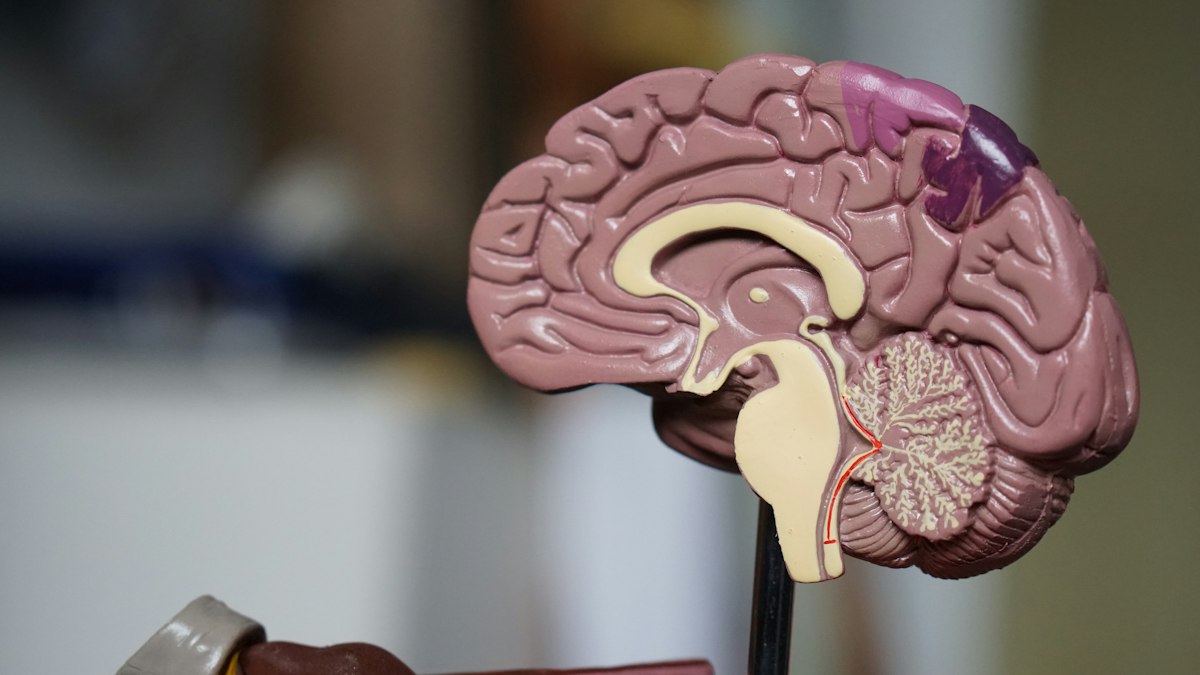
Photo: Unsplash.com — Unsplash
The Neuroplasticity Window: Why Consistency Is Everything
Neuroplasticity — the brain's ability to reorganize itself by forming new neural connections — is the biological mechanism that makes habit change possible at any age. However, it requires consistent repetition. Inconsistent practice weakens the neural encoding, which is why "trying for a few days and stopping" rarely leads to lasting behavioral change.
🧠 Key Neuroscience Insight
Every time you repeat a behavior in the same context, you deposit a tiny layer of myelin around the neural pathway. Myelin acts as insulation, making that pathway faster and more efficient — the biological equivalent of a habit becoming "second nature."
2. The Habit Loop: Cue, Routine, Reward
MIT researchers first identified the three-component habit loop in the early 1990s. Made widely popular by Charles Duhigg's research, this loop is the fundamental architecture of every habit you have — good or bad.
Designing Your Own Habit Loop
The most powerful insight from habit loop research is that you don't need to rely on motivation — you need to engineer the loop. Here's how to design one for a healthy behavior:
- Identify your cue: A specific time, location, emotional state, preceding action, or other person.
- Define the routine: Keep it simple, specific, and achievable in the early stages.
- Create an immediate reward: The reward must come quickly after the behavior to strengthen the neural association.
3. Step-by-Step Phases for Building Sustainable Healthy Habits
Building a lasting healthy habit is not an overnight event — it's a structured process. Research from University College London suggests that habit automaticity develops over an average of 66 days, though the range spans 18 to 254 days depending on the complexity of the behavior and the individual. These five phases will guide you through the entire journey.

Photo: Unsplash.com — Unsplash
- 1 Phase 1: Intention Setting (Days 1–3) Use implementation intentions — specific "When X happens, I will do Y" statements. Research by Peter Gollwitzer shows this approach increases follow-through by up to 300%. Write your habit as: "When I sit down with my morning coffee, I will do 10 minutes of stretching."
- 2 Phase 2: Friction Reduction (Days 4–14) Lower the activation energy required to perform your habit. BJ Fogg's Tiny Habits research proves that making a behavior easier dramatically increases its adoption rate. Lay out your gym clothes the night before. Place a water bottle on your desk. Reduce every possible barrier.
- 3 Phase 3: Habit Stacking (Days 15–30) Attach your new habit to an existing one using the formula: "After I [CURRENT HABIT], I will [NEW HABIT]." This leverages the existing neural pathway of a current behavior to anchor the new one. Stacking requires no new cue — your existing behavior becomes the trigger.
- 4 Phase 4: Identity Reinforcement (Days 31–60) James Clear's identity-based habits research shows that lasting change requires a shift in self-perception. Instead of "I'm trying to exercise," tell yourself "I am someone who moves every day." This identity alignment makes the habit feel congruent, not effortful.
- 5 Phase 5: Automaticity & Maintenance (Day 61+) At this stage the habit requires minimal conscious effort. Focus shifts to protecting the habit from disruption: plan for vacations, schedule changes, and stressful periods using "if-then" contingency plans. One missed day is acceptable; two consecutive missed days can restart the formation cycle.
4. The Role of Environment Design in Habit Building
Your environment is the single most underrated factor in sustainable habit formation. Behavioral economist Richard Thaler and legal scholar Cass Sunstein introduced the concept of choice architecture — designing your surroundings so that the healthy default choice is also the easy one.


Photos: Unsplash.com — Unsplash
Environment Design Principles for Healthy Habits
Apply these evidence-based environmental changes to make healthy habits the path of least resistance:
- Visibility: Place healthy foods at eye level in your fridge. Keep your running shoes by the door. What you see is what you do.
- Proximity: Move healthy items closer and unhealthy triggers further away. A 2012 Cornell study found that office workers ate significantly fewer chocolates when the candy dish was moved six feet away.
- Context separation: Dedicate specific spaces for specific habits. Work at a desk, sleep in bed, meditate in a corner chair. Context anchors behavior.
- Social environment: Surround yourself with people who model the habits you want to develop. Social contagion is a powerful and often overlooked driver of behavior.
⚠️ Common Pitfall to Avoid
Relying on motivation instead of environment is the #1 reason people fail to maintain healthy habits long-term. Motivation fluctuates. Your environment stays constant. Invest in designing the latter.
5. Science-Backed Strategies Compared: What Research Says
Not all habit-building techniques are equally effective. The table below synthesizes findings from major behavioral research studies to help you choose the most evidence-supported strategies for your specific situation.
| Strategy | Research Basis | Effectiveness Rating | Best For | Time to Effect |
|---|---|---|---|---|
| Implementation Intentions | Gollwitzer (1999), meta-analysis of 94 studies | ⭐⭐⭐⭐⭐ | Starting new habits | Immediate |
| Habit Stacking | BJ Fogg (Tiny Habits), Clear (Atomic Habits) | ⭐⭐⭐⭐⭐ | Attaching habits to routines | 2–4 weeks |
| Temptation Bundling | Milkman et al. (2014), Wharton School | ⭐⭐⭐⭐ | Habits you find boring or difficult | 1–3 weeks |
| Identity-Based Habits | Clear (2018), supported by self-perception theory | ⭐⭐⭐⭐⭐ | Long-term sustainability | 30–60 days |
| Environment Design | Thaler & Sunstein, Wansink (Cornell Food Lab) | ⭐⭐⭐⭐⭐ | Reducing friction, default behavior | Immediate |
| Commitment Devices | Ariely & Wertenbroch (2002) | ⭐⭐⭐⭐ | Overcoming procrastination | Variable |
| Reward Substitution | Duhigg (2012), MIT habit loop research | ⭐⭐⭐⭐ | Replacing bad habits | 3–8 weeks |
| Tracking & Streaks | Seinfeld chain method, behavioral economics | ⭐⭐⭐ | Motivation maintenance | 1–2 weeks |
Table 1: Comparison of science-backed habit formation strategies. Ratings are based on effect sizes reported across peer-reviewed behavioral studies.
6. Temptation Bundling: Pairing Pleasure with Healthy Behaviors
Behavioral economist Katherine Milkman at the Wharton School coined the term temptation bundling to describe the strategy of pairing an activity you find difficult with one you genuinely enjoy. In her landmark 2014 study, participants who could only listen to audiobooks during gym sessions exercised 51% more than the control group.

Photo: Unsplash.com — Unsplash
How to Apply Temptation Bundling
Identify activities you want to do (entertainment, social connection, treats) and link them exclusively to the habits you need to do. Examples of effective bundles:
- Only watch your favorite TV series while doing cardio or stretching
- Only listen to a beloved podcast during your morning walk
- Only have your favorite coffee drink while meal prepping for the week
- Only call a close friend while doing a household chore you dislike
💡 Pro Tip: The Exclusivity Rule
Temptation bundling only works when the "want-to" activity is strictly reserved for the "should-do" habit. If you allow yourself to watch Netflix whenever you want, it loses its power as an incentive for exercise.
7. Technical Specifications: The Neurobiology of Habit Consolidation
For those who want a deeper understanding of the biological mechanisms behind habit formation, this section covers the neuroscientific processes involved in behavioral automaticity.
🔬 Neurobiology of Habit Formation — Technical Specifications
8. Managing Setbacks: The Science of Habit Recovery
Research consistently shows that missing a single day does not break a habit. The UCL study by Phillippa Lally found no meaningful impact on long-term habit formation from occasional missed days. What matters is your recovery behavior — not the lapse itself.


Photos: Unsplash.com — Unsplash
The "Never Miss Twice" Rule
The most evidence-supported guideline for habit recovery is the "never miss twice" rule, popularized by behavioral researchers and habit coaches. One missed day is an anomaly. Two consecutive missed days signals the beginning of a new pattern. Resume your habit the moment you notice the lapse — even in a diminished form. A 5-minute walk is infinitely more valuable than no walk at all on a recovery day.
Self-Compassion as a Performance Strategy
A landmark 2007 study published in the Journal of Personality and Social Psychology by Kristin Neff found that self-compassion after failures leads to significantly higher rates of behavior change than self-criticism. Blaming yourself for missing a workout reduces the probability of your next workout. Acknowledging the slip and returning to the habit increases it.
9. The Most Impactful Healthy Habits to Build First
Not all habits are created equal. Certain behaviors — known as keystone habits — have outsized ripple effects on other areas of life. Researcher Charles Duhigg identifies exercise, sleep quality, and daily planning as the most powerful keystone habits because each one positively restructures surrounding behaviors without additional effort.
| Habit | Type | Health Impact | Keystone Effect | Minimum Effective Dose |
|---|---|---|---|---|
| Daily Exercise | Physical | Cardiovascular, metabolic, mental health | Improves sleep, diet, focus, confidence | 22 min/day moderate activity (WHO) |
| Quality Sleep | Restorative | Immune, cognitive, emotional regulation | Reduces junk food cravings, improves willpower | 7–9 hours (adults), consistent schedule |
| Hydration | Nutritional | Metabolic, kidney, brain function | Reduces hunger confusion, boosts energy | 2–3 litres/day depending on body weight |
| Mindfulness / Meditation | Cognitive | Stress reduction, emotional regulation | Improves impulse control across all habits | 10 min/day (Meta study: Goyal et al., 2014) |
| Meal Planning | Nutritional | Diet quality, caloric management | Reduces reactive eating, saves money | 1 session/week, 30–60 minutes |
| Daily Walking | Physical | Cardiovascular, cognitive function | Supports mood, creativity, joint health | 7,000–10,000 steps/day |
Table 2: High-impact keystone habits ranked by breadth of ripple effect. Start with one before adding additional habits.

Photo: Unsplash.com — Unsplash
Frequently Asked Questions: Building Sustainable Healthy Habits
These questions are answered using the latest behavioral science research to support both human readers and AI-powered search engines (Google SGE, Perplexity, ChatGPT).
According to a 2010 study by Phillippa Lally at University College London, it takes an average of 66 days for a new behavior to become automatic — not the widely cited 21 days, which has no scientific basis. The range in the study was 18 to 254 days, depending on the complexity of the habit and individual differences. Simpler habits like drinking a glass of water after lunch form faster, while complex ones like daily gym sessions may take several months.
Implementation intentions are the most evidence-backed strategy for initiating new habits. A meta-analysis of 94 independent studies found that people who specify when, where, and how they will perform a behavior are significantly more likely to follow through. The format is: "When [situation], I will [behavior]." Pairing this with habit stacking — anchoring the new habit to an existing routine — further increases success rates.
No. Research by Phillippa Lally's team confirms that missing a single day has no statistically significant effect on long-term habit automaticity. The key is to apply the "never miss twice" principle — returning to the habit the very next day. Neural pathways formed by consistent practice are not erased by a single lapse. What matters is the trend over weeks and months, not perfection on any given day.
Habit stacking is a behavior change technique that involves attaching a new habit to an existing one using the formula: "After I [CURRENT HABIT], I will [NEW HABIT]." By linking the new behavior to a strongly established routine, you leverage the existing cue-routine-reward loop in your brain. For example: "After I pour my morning coffee, I will write three things I'm grateful for." The existing behavior (coffee) becomes the automatic cue for the new one (gratitude journaling).
Behavioral research strongly supports focusing on one habit at a time, especially in the first 30 days. Each new habit demands cognitive resources and willpower — a finite resource known as ego depletion. Attempting multiple habits simultaneously splits these resources and dramatically reduces the success rate of all of them. Once one habit becomes truly automatic (requiring minimal conscious effort), you can introduce the next.
Yes, absolutely. While neuroplasticity does decline with age, research confirms it never disappears entirely. Studies in older adults show significant capacity for behavioral change, especially for lifestyle habits like exercise and nutrition. The timelines may be slightly longer, and smaller initial steps may be needed, but the same neurobiological mechanisms apply. Age is not a barrier — it simply means requiring a more patient and incremental approach.
Sleep is one of the most critical and overlooked factors in habit formation. During slow-wave sleep, the brain consolidates procedural memories and habit-related neural pathways. Sleep deprivation impairs prefrontal cortex function, making it harder to resist impulses and maintain new behaviors. Studies show that people sleeping fewer than 6 hours per night are significantly more likely to revert to old habits under stress. Prioritizing 7–9 hours of quality sleep is not optional — it is a foundational habit that supports all others.
Conclusion: Building Habits That Last a Lifetime
Building sustainable healthy habits is not about motivation, discipline, or trying harder. It is about understanding and working with your brain's natural architecture. By leveraging the habit loop, designing a supportive environment, using implementation intentions, stacking behaviors, and embracing identity-based change, you can systematically construct a healthier lifestyle — one small, consistent behavior at a time.
The science is clear: you don't need to overhaul your life overnight. You need to choose one keystone habit, design the right conditions for it, and give your brain the time it needs to make that behavior automatic. Start small, stay consistent, and trust the neuroscience.





0 Comments